
Things to Do in Togo
Voodoo drums, red-earth castles, and the Atlantic licking at your heels.
Top Things to Do in Togo
Find activities and tours you'll actually want to do. Book through our partners -- no booking fees.

Plan Your Trip
Essential guides for timing and budgeting
Climate Guide
Best times to visit based on weather and events
View guide →Day Trips
The best excursions and nearby destinations worth the journey
Explore day trips →Where to Stay
Best neighbourhoods, hotel picks, and booking tips
Find hotels →Travel Insurance
What's required, what coverage matters, and how to get a quote
Read guide →What to Pack
Climate-specific gear, essentials, and what to leave at home
See packing list →When Should You Visit Togo?
Tap a month for weather, crowds, and highlights
View full year-round climate guide →Your Guide to Togo
About Togo
Togo hits you first through scent: salt spray, hot asphalt, and the sweet, woody smell of shea butter roasting over charcoal in Lomé's Marché des Féticheurs. That market in the Voodoo Quarter is where you'll find the real currency. Not just the West African CFA franc. But cowrie shells, dried chameleons, and the kind of quiet intensity that makes you forget which century you're in.
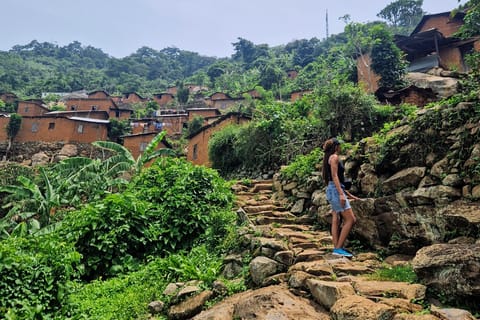
Forty kilometers north, the ocean's roar fades into palm groves around Lake Togo, where a fisherman might paddle you across for a handful of francs. Less than the cost of bottled water. In a pirogue he carved himself. Upcountry is where Togo shows its spine: the Akwapim-Togo ranges dusted with green, and the clay tower Batammariba settlements of Koutammakou, where architecture looks less built than sculpted by wind.
The catch is infrastructure, or its absence: the highway north from Lomé to Kpalimé is smooth. But venture off it and you're on red earth tracks that turn to slick mud the moment storms blow in. That roughness is the point. You don't come to Togo for polish. You come for the moment a voodoo ceremony's drum circle starts unexpectedly in a courtyard, the sound feeling less like music and more like the land's own heartbeat.
Travel Tips
Transportation: Getting around Togo requires a shift in thinking. Within Lomé, the zemi-johns, shared motorcycle taxis, are the default for short hops and cost a fraction of what car taxis charge. Agree on the price, usually a few hundred CFA francs, before you climb on. For longer distances, shared bush taxis, often aging Peugeot 504s, are the backbone, departing when full from stations like Gare de Lomé. A seat to Kpalimé might run you a couple thousand francs. The insider trick? For trips up to the Kara region or Koutammakou, renting a private 4x4 with a driver for the day, while a splurge relative to bush taxis, saves hours of waiting. It provides important flexibility on rough roads. Worth it.
Money: Cash is king across Togo, with the West African CFA franc being the only currency you'll regularly use. ATMs in Lomé, around the Grand Marché and in the Plateau district, are reliable for withdrawals. Once you leave the capital, ATMs vanish. Stock up on small denomination bills. Credit cards are accepted only at a handful of upscale hotels and restaurants in Lomé. A common pitfall is forgetting that larger bills, like the 10,000 CFA note, are often hard for market vendors and taxi drivers to break early in the day. Start each morning by getting change at your hotel or a bakery. Tipping isn't a formal expectation. Rounding up a taxi fare or leaving a small amount for good service is appreciated.
Cultural Respect: Togo's cultural fabric is woven with threads of voodoo, even in predominantly Christian or Muslim communities. In places like the Voodoo Quarter in Lomé or villages in the Mono region, always seek explicit permission before photographing a shrine, a ceremony, or even a person in traditional dress. A simple, polite request in French, 'Est-ce que je peux prendre une photo?', is the required first step. Dress is generally modest, when visiting religious sites or upcountry villages. Covering shoulders and knees is a safe default. When greeting elders or community leaders, a slight bow or nod of the head adds respect to the standard handshake. The biggest misstep? Dismissing voodoo as mere performance for tourists. For many Togolese, it's a lived spiritual practice.
Food Safety: Togolese food is a highlight. But navigating it safely requires a few rules. Stick to busy street stalls and maquis, open air restaurants, where the turnover is high. The sizzle of grilled poisson braisé, whole fish, or poulet bicyclette, free range chicken, is a good sign. At these spots, a heaping plate with alloco, fried plantains, and spicy piment sauce will cost very little. Be cautious with raw salads and unpeeled fruits from street vendors, as the washing water might be suspect. Instead, look for freshly cooked staples like fufu, pounded cassava and plantain, with groundnut or okra soup, served steaming hot. Bottled water is essential everywhere outside high end hotels. An easy insider move: follow the lunchtime crowd of local office workers. They know which maquis offers both flavor and reliability.
When to Visit
Togo's rhythm is dictated by the dry Harmattan winds and the downpours of the rainy seasons. The sweet spot for most visitors is the long dry season from November to March. Temperatures in Lomé hover around a humid 30°C (86°F), the skies are clear, and the dirt roads upcountry to Koutammakou are passable. This is also peak season.
Hotel prices in Lomé are at their highest. The short dry period from late June to August has a similar climate, though it can be hotter inland. The shoulder months of October and April are interesting propositions: you might catch a brief shower. But the landscape is vividly green, tourist numbers thin out, and accommodation prices dip noticeably.
The true rainy seasons, April to July and September to October, bring challenges, for travel in the north. Daily downpours can turn red earth tracks into impassable slurry, and humidity in the south becomes oppressive. However, if you're anchored in Lomé and don't mind the occasional tropical deluge, you'll find the city quieter and the costs lower.
For festival goers, timing a visit around the Epe Ekpe festival in Glidji, usually July, or the Voodoo Festival in January has a profound cultural experience. Expect crowds and booked up lodgings in those specific regions.
More Ways to Experience Togo
Tours, day trips, and local experiences curated by on-the-ground operators.
Didn't see anything interesting yet?
Browse Viator's full catalog of tours, day trips, food experiences, and private guides in Togo.
See All Togo Tours on Viator